

Showing posts with label architecture. Show all posts
Showing posts with label architecture. Show all posts


Portfolio Research and Mock Ups


____________
Mock Ups:
Possible Covers


Chapter Sets


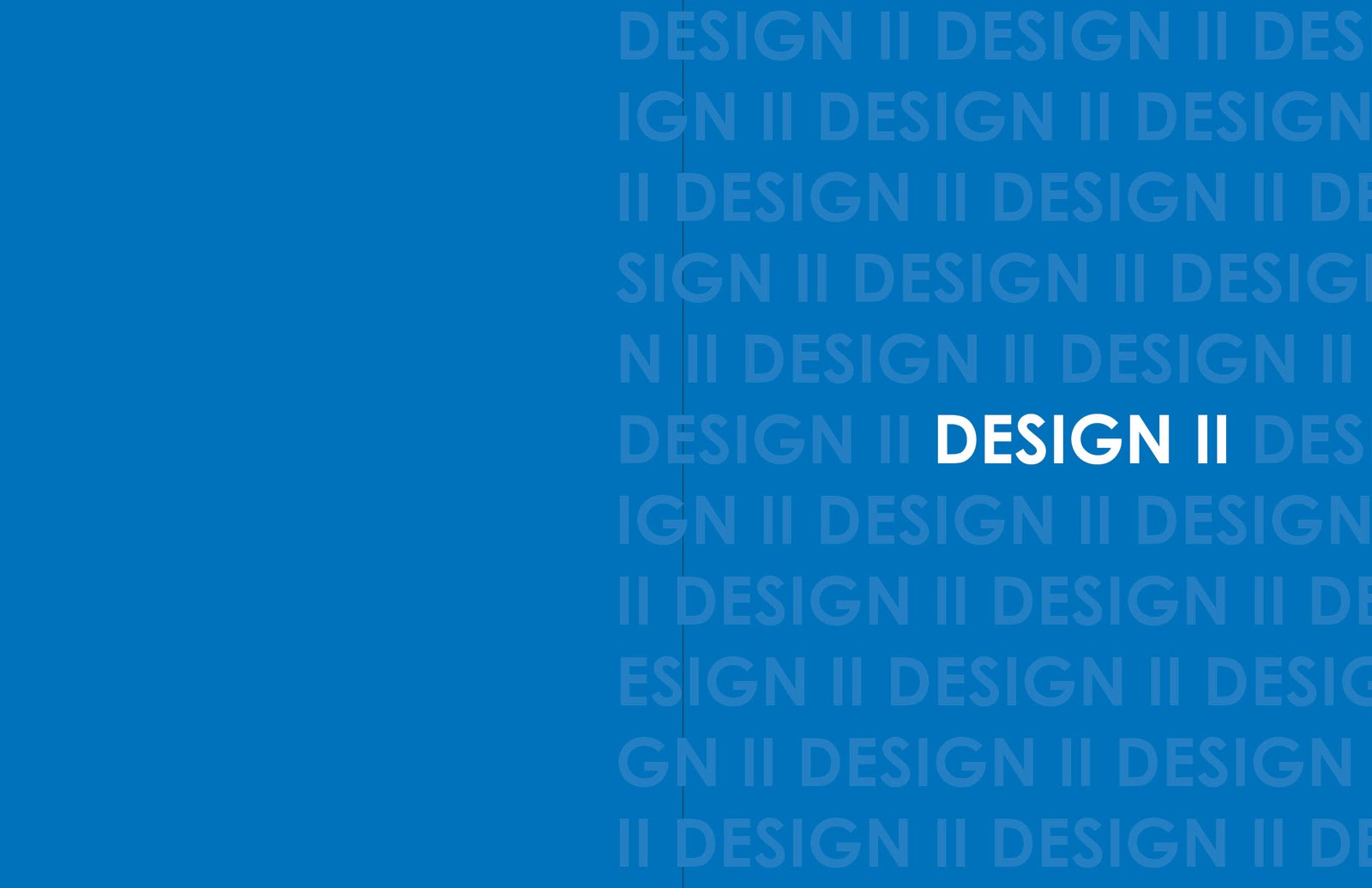

I decided to go with a monochromatic color scheme. I am staying away from the pinks, purples, yellows and picking an eye neutral blue. I tried green but I could not find 3 shades that really worked for me. These are just mock ups and pending my professor's critiques I will move on from there and really get working on it.
Final: August 2nd, 2pm

Intro to Digital Architecture: Photoshop Design 3 Project - Second Draft
And the wheels keep turning!
It took me 4hours + to alter and work on this second draft from the original.
I went through a lot of different color choices, fonts, filters, layers, and the such.
I took notes and renamed the layers and I added them for quick reference.
I am very pleased. I cannot wait to pin up tomorrow!
___
Intro to Digital Architecture
Photoshop Project - 2nd Draft
OLD:
OLD:

NEW:

AIAS + Architecture
As Marketing Manager of the Valencia AIAS Chapter - I started working on my duties.
We do not take "office" until the beginning of the Fall Semester but I can't wait to get things off the ground. We have gone viral:
joint / follow :D
Rem Koolhaas' Preservation
An article about architecture and preservation from the point of view of Rem Koolhaas. I bolded parts of the article I found interesting.
____
____

In 1848, Marx and Engels famously prophesied that within capitalism, "all that is solid melts into air." Kicking off the New Museum's Festival of Ideas for the New City earlier this month, Rem Koolhaas offered what might be considered an audacious update of that analysis, which would read something like this: within capitalism, "some things that are solid melt into air — and some things turn to stone forever." He was speaking about the concept of "heritage," the hypnotic lure that the past exerts on us, and the way that it can come to choke off the vitality of the present. "Embedded in huge waves of development, which seem to transform the planet at an ever-accelerating speed, there is another kind of transformation at work: the area of the world declared immutable through various regimes of preservation is growing exponentially," states a manifesto-like text accompanying an exhibition Koolhaas has put together on the same themes for New Museum's newly annexed Bowery storefront space. "A huge section of our world (about 12%) is now off-limits, submitted to regimes we don't know, have not thought through, cannot influence."
The severe and stylish Koolhaas is something of a one-person festival of ideas himself, so there could be few people more appropriate to kick off the New Museum's symposium. He made his name as a penner of experimental urbanist manifestos ("Delirious New York," for instance, his 1978 "retrospective manifesto" for the Big Apple) long before he was a practicing architect. His keynote address was characteristically audacious, sarcastic, and slightly shapeless, as if struggling to hold more ideas than it could contain. Among other things, he breezed over such huge topics as a defense of the historical importance of socialist architecture, and a devastating critique of the ideology underlying Tate Modern's Turbine Hall exhibition program. (On the latter point, his main thrust is that huge spaces encourage huge art that then encourages huge spaces, ad absurdum.)
But the core of the talk was a concrete deconstruction of the opposition between "preservation" and "progress," which Koolhaas sees as flip sides of the same coin, the one bearing the contradictions of the other. The first preservationist initiatives coincide with the French Revolution (the Commission des Monuments, 1790) and then the Industrial Revolution in England (Society for the Protection of Ancient Buildings, 1877). From there, preservation has more or less spread with the march of modernity, which is to say the onrush of capitalist development and the dislocation that goes along with it. This makes perfect sense: As nature is despoiled, you make parks; as history is profaned, you declare monuments.
Over time, Koolhaas argues, the kinds of things that have been considered preservable have broadened — originally just monuments, now expansive and maddeningly indistinct "current and past social expressions" — while the time necessary for something to warrant official status as heritage has shortened, from centuries to now just a few years. Koolhaas argues that this accelerating mania for the past is approaching an inflection point: "Eventually it will become prospective," he hypothetized in his address. "We will preserve things before they are even finished."
Within the visual arts there is a major parallel. MoMA was a radical institution when it was founded, because a "Museum of Modern Art" was considered a paradox — museums were for antique culture. Later, this idea was superceded by proliferating museums of "contemporary art," a shift in a relationship to time that the New Museum symbolizes in its very name. And even more recently, much critical ink has been spilled over how the concept of postmodernism — a paradigm that at least tried to explain the present as some kind of historical epoch — has yielded to the vexing craze for "emerging art," a haphazard euphoria for the present without any theory of itself at all.
Yet the implications of this temporal compression are more pressing for architecture than for art, because architects are put up against the concrete problems of how to create living spaces for people, and so hit the limits of an overcrowded present more quickly. Koolhaas gives the example of his own 1998 Maison à Bordeaux house in France, which was almost immediately declared a landmark, thereby complicating the process of redesigning it for an actual living occupant. I remember being at a public hearing a few years ago about the Museum of Arts and Design's ultimately successful proposal to revamp Edward Durrell Stone's "Lollipop building" on Columbus Circle. After parades of impassioned pronouncements about the need to preserve the quirky structure (including several from Tom Wolfe in his ice-cream suit), the sole person to stand up in defense of the remodeling was a representative of the American Institute of Architects, who was booed. To help sort out these disputes, Koolhaas proposed — at least semi-seriously — that UNESCO create a "Convention Concerning the Demolition of World Cultural Junk" to complement its "Convention Concerning the Protection of the World Cultural and National Heritage." He also presented a preservationist scheme that he had dreamed up for Beijing, a kind of parody of Le Corbusier's infamous Plan Voisin that would have torn up Paris to put in a grid of utopian sky-scraper tower blocks. Koolhaas proposes zoning a regular grid of boxes onto the map of the city. Everything within their borders would be preserved, whereas everything outside of them would be fair game to destroy. The complete formal neutrality would guarantee that a cross-section of material was saved, without political arguments getting in the way, thereby freeing up the urban fabric for salutary change.
In a churlish New Yorker dispatch from Koolhaas's keynote, Paul Goldberger called the architect's concerns about the heritage industry "overstated," and essentially argued that worries about preservation have been around forever. This seems rather ungenerous, as the point here is not that these dilemmas are new or novel but that there is a trajectory to them that makes them ever-more insistent. The question I have is about the answers Koolhaas offers. He starts from the notion that the problematic and increasingly indiscriminate character of "preservation" is overdetermined by its relation to the madness of our underlying model of indiscriminate development — but then he implies that the problem is not this economic model itself, but the fact that we don't have an adequate theory of what "preservation" means, or how it should work. Well, obviously we should think through the implications of declaring something part of our heritage, and the underlying agendas that this gesture involves. But left on its own, this line of argument is a little like trying to deal with the effects of a devastating downpour with an umbrella; by all means, let's get everyone umbrellas, but this won't stop the flooding.
Ultimately, if Koolhaas's proposed solutions sound dystopian or satirical, I think that this is because the very nature of the problem he is identifying makes it more and more difficult to resolve his two roles — as visionary theorist and as practical architect offering workable solutions — into one. The actual solution is not a better theory of preservation, but a more humane model of economic progress — a better, more harmonious way of living in general. In the absence of this, the contradictions are only bound to pile up, with or without a theory or clever plan. This, it seems to me, is the sobering underlying suggestion of Koolhaas's address, and it is a thought that is definitely worth preserving.
____
Source:
Fashion + Architecture = Paper House
From Design Boom
Japanese Architect Shigeru Ban has collaborated with french lifestyle brand Hermès to create a paper house pavilion on show at Milan Design Week 2011. located inside Hermès Maison, the structure follows in the architectural style of ban, constructed from paper tubes with strips of paper woven in between the vertical composition to create the house.
yes, please:

More pictures at the source
Education + Architecture: 50 Things
50 Things I didn’t learn in Architecture School

1.) Don’t send an email for everything, they live forever and get sent around
2.) Be wary of moonlighting “opportunities”, there is a reason they aren’t coming in the front door
3.) Don’t dress like an intern, get some pants that don’t say ‘Dockers’ of the back
4.) Perception is reality; it doesn’t always matter if you’re right or not
5.) Be extra nice to the I.T. person
6.) Architectural firms have different glass ceilings based on the job title - know what they are
7.) Talking like an architect makes you sound like you are trying too hard to sound like you know something
8.) Listen to people who have been around the block, they know things
9.) Pay attention to what’s important to you, learn who you are, not who you want to be
10.) All firms are wildly different, try and determine the culture of the workplace
11.) When you are sick, stay at home – nobody wants your cooties
12.) Architects work in a service industry, try and remember that you work for someone else
13.) It’s architecture not emergency surgery, mix in some hobbies during the weekend
14.) Learn how the business is run and how to sell work, it’s more important than being a designer
15.) Even when your Boss is your friend, they will fire you
16.) Most people don’t like coffee breath even if it is from Starbucks coffee
17.) Never get drunk at office functions, people will remember you forever as “that person”
18.) Being good at CAD does not make you a good architect
19.) Unless it’s in your job description, don’t get coffee for the Boss – nobody likes a suck up, not even your Boss
20.) Know what your role is and do it
21.) Your Boss doesn’t care why you didn’t do what he asked; excuses and reasons sound a lot alike
22.) Ask for opportunities; don’t wait for them to come to you
23.) Keep your outside business outside the business
24.) If your firm is outsourcing work, fix up your resume
25.) If your firm justifies long hours as “part of the training of interns” look for a different firm
26.) Be a participant in developing your career – nobody can read your mind and know what you want
27.) The eating habits you had in school should stay in school
28.) Having a graduate degree in something other than architecture can actually make you a better architect
29.) No matter how great you think you are, until your name is on the door, be prepared to do what you are asked to do
30.) Once you leave architecture school, people don’t want to talk about architecture all the time
31.) Your school portfolio doesn’t have the value you think it does and once you have a real job, expect to leave it in the closet forever
32.) Being a good designer is more about giving people what they want, not what you want
33.) You should have pulled your last all-nighter back in school, be suspicious of the firm where this pattern continues
34.) Learn how to speak well in public – take a class if needed
35.) Don’t be a jerk about sustainability; there are many priorities on a project
36.) Volunteer some of your time to charity – any charity
37.) Most architects will never live in a house that they designed for themselves
38.) Pay attention to everyone’s opinion, and treat them with respect
39.) Hand drawing is not a gift; it’s a skill and has value beyond creating pretty pictures
40.) Don’t wear sneakers to work – dress like you could have a client meeting that day
41.) Don’t yell at people even if you’re angry, and never send an email when you’re angry
42.) The person in school that you thought had terrible designs – but could talk about their project - will be your boss
43.) The person who can sell work has more value than the person who can design the work
44.) Staying up at work all night isn’t cool, get your work done during regular hours and go home to your friends and family
45.) Make friends with people who aren’t architects
46.) You will always work with someone you don’t like, find a way to make it work
47.) Running a business is difficult and stressful; the person who signs your paychecks deserves to be paid more than you
48.) Don’t burn any bridges – architects are a small community of people and you will run into the same people over and over again
49.) Read books without pictures in them every once and awhile
50.) You can’t always control your clients, if you see a project that looks really bad, maybe the client made them do it. Be nice.
List and Picture Source:
Life of an Architect
____
Another good read:
Life of an Architect: 30 Things You'll Never Hear an Architect Say
____
Another good read:
Life of an Architect: 30 Things You'll Never Hear an Architect Say
GASP
It's here !!! All the hard work, all the anticipation, all the meet and greet comes to an end. I am very excited to see the results, regarding of the outcome, I can't imagine how much fun last week was. I never ran for anything before - I had no idea what to do, how to run a campaign, but I know marketing and I am pretty shameless = together that was my recipe. I knew that my unconventional name needed to stick in student's mind, so a catchy sign was in order. I am a master of dramatic expression and that Saturday walking through building 9, when I got the brilliant idea of the art installation- the "it's on" light went off. Talking to people about the AIAS our plans for the future, what we currently do, what we have done came so natural to me. I refused to mud sling, I did not even mention my oponents name once during the week. I stuck to my plan, my action steps, and who I am - hopefully everyone sees that and appreciates it. Either way, whoever wins, AIAS will get a killer new Marketing Manager.


My Ballot:


:D
___
UF: School of Architecture
Yesterday John Maze, whose hippie hair rivals mine in length, came to talk to us transfer students about: UF School of Architecture!!! There must have been a good 30 kids when he starts and little by little a lot of them started to leave. He said it didn't hurt his feelings that they were not interested in the school. My friend next to me whispered in my ear, "I wanna go to Pratt, but the weather sucks, so I'm gonna stick around" lol :D He told us all about our pin up and what the 2 years will bring. He went through the D5 to D8 curriculum, and it will be intense. I am freaking psyched and going to need a loan/scholarship so I can properly focus on my assignments without having to deal with any other distractions.


GO GATORS!


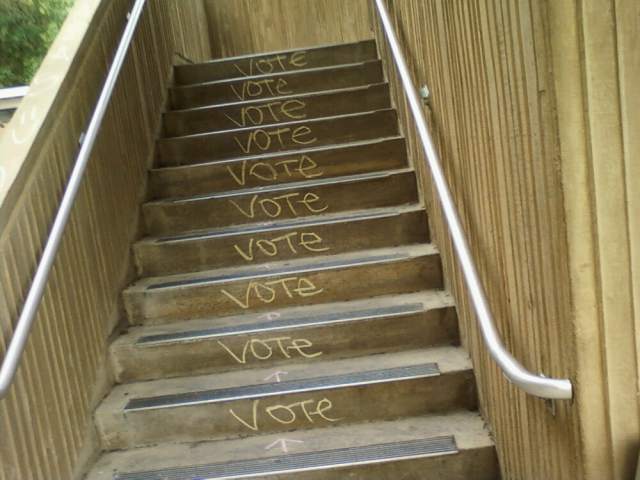
CALL FOR ACTION - ANSWERED!!!
Today I went with my brother to the West Campus to put up my official flyer, and check out the art installation. We hurry in through the bottom floor and make our way upstairs. As I turn the corner there is the phone booth. And, what do I see??? MY COLLABORATION PROJECT IS A SUCCESS!!!
The call for action has been answered and the responses have been overwhelmingly great. I cannot put into words how proud I am to be part of this art collective. I had a vision of this art installation bringing about the candidates together. We all want our ideas to go forward, the solidarity that I saw from my peers just took my breath away for a second. I was smiling from EAR to EAR. Art triumphed as a collective, a collaboration, a human effort, and an emotion.
I went through the design studios speaking to anyone who I encountered about my ideas for new social networking and how to improve what is already in place. It was wonderful to meet and greet students who had questions for me about the art installation, my campaign, and me.
I embarked on this campaign with a sense of hope to bring new initiatives that I know will do nothing but advance the role of our AIAS chapter in our school and community.
So beautiful:


The call for action has been answered and the responses have been overwhelmingly great. I cannot put into words how proud I am to be part of this art collective. I had a vision of this art installation bringing about the candidates together. We all want our ideas to go forward, the solidarity that I saw from my peers just took my breath away for a second. I was smiling from EAR to EAR. Art triumphed as a collective, a collaboration, a human effort, and an emotion.
I went through the design studios speaking to anyone who I encountered about my ideas for new social networking and how to improve what is already in place. It was wonderful to meet and greet students who had questions for me about the art installation, my campaign, and me.
I embarked on this campaign with a sense of hope to bring new initiatives that I know will do nothing but advance the role of our AIAS chapter in our school and community.
So beautiful:


I saw Professor R. who and talked with me about my campaign, and what brought about this installation.
He said to me:
"I didn't know what exactly it was about. Then I saw your name on it and it made more sense"
isn't that perfect.
_____________________
SOUND THE ALARMS: CAMPAIGN WEEK IS HERE :)
It is 12:14am - and it's the official start of AIAS Valencia Campaign Week :) I've been preparing for today, and I am glad it is finally here.
I just came back from kinkos, with my official flyer:

lets get voting!
Art Installation
"Art is anything you can get away with"
~Andy Warhol
~
In efforts to go green AIAS is only allowing candidates one 11x17 poster. I went to building 9 to scope it out, and the vacant space next to the security phone was begging for attention. I had to abide.
~Andy Warhol
~
In efforts to go green AIAS is only allowing candidates one 11x17 poster. I went to building 9 to scope it out, and the vacant space next to the security phone was begging for attention. I had to abide.
It is only natural that we outgrow even our basic comforts
We give up something good, for something better


Background:
My father had trimmed their front tree. I saw the stump and knew I wanted to use it.
We've had this old phone in our family, which was now stored in the attic. My mother let me take it and use it for something better than clutter.
My name within a heart? I needed some nostalgia.
I attached a sharpie and tape to encourage collaboration from other candidates.
Art is a collective.
___
VOTE FOR ANALIA - APRIL 4TH
been busy taking care of mom, catching up on stuff, and getting all this in order:

(: it's official :)
____
voteforanalia.tumblr.com
voteforanalia.tumblr.com
voteforanalia.tumblr.com
voteforanalia.tumblr.com
voteforanalia.tumblr.com
voteforanalia.tumblr.com
voteforanalia.tumblr.com
voteforanalia.tumblr.com
voteforanalia.tumblr.com
voteforanalia.tumblr.com
voteforanalia.tumblr.com
voteforanalia.tumblr.com
voteforanalia.tumblr.com
voteforanalia.tumblr.com
voteforanalia.tumblr.com
voteforanalia.tumblr.com
voteforanalia.tumblr.com
voteforanalia.tumblr.com
voteforanalia.tumblr.com
voteforanalia.tumblr.com
Media Marketing Darling: VOTE APRIL 4th
It is that time of the year when the AIAS votes for their new member leads: Pres, Vice Pres, Treasury, Media Marketing, etc....
I will be amazing at this position because I live/work/and breathe all things internet. I have accounts on all major media outlets. I am ready to spread the word of Architecture. I have lots of ideas how to expand our association, what to do better, what to do new at all. I am very excited. I wish I would of attended more meetings this semester, because I need alliances. VOTE FOR ME.
Ever since Architectural History 2 and learning about the Constructivist period - the Russian advertising posters always stood out:

I have been waiting to use it for a campaign but I could not decide when and where.
This is a great time to put it into action. The juxtaposition of the black and white female with the bold colors the bright call to action font is perfect for my Savage Minimalist revolution.
I need these posters made, printed, and posted around campus so that I may win the position I am seeking.
I will be attending the Monday meeting to successfully start my campaign for action.
I will be amazing at this position because I live/work/and breathe all things internet. I have accounts on all major media outlets. I am ready to spread the word of Architecture. I have lots of ideas how to expand our association, what to do better, what to do new at all. I am very excited. I wish I would of attended more meetings this semester, because I need alliances. VOTE FOR ME.
Ever since Architectural History 2 and learning about the Constructivist period - the Russian advertising posters always stood out:

I have been waiting to use it for a campaign but I could not decide when and where.
This is a great time to put it into action. The juxtaposition of the black and white female with the bold colors the bright call to action font is perfect for my Savage Minimalist revolution.
I need these posters made, printed, and posted around campus so that I may win the position I am seeking.
I will be attending the Monday meeting to successfully start my campaign for action.
VOTE FOR ANALIA
APRIL 4th
APRIL 4th
MEDIA MARKETING


Art + Architecture: Wright or Wrong?
Fantastic article dissecting the methodology of Frank Lloyd Wright throughout his works. I bolded parts of the article I found interesting.
____

The Milwaukee Art Museum's exhibition "Frank Lloyd Wright: Organic Architecture for the 21st Century" marks the centennial of Taliesin, Wright's legendary, scandal-plagued hilltop home and summer studio in the midst of farmland about 40 miles west of Madison. It is a decent media hook for a Wright show, and the display is housed in a pleasant setting: the Quadracci Pavilion, designed by Santiago Calatrava and opened in 2001. There is a definite poetry to seeing a great architecture exhibition in a dazzling piece of architecture.
Such a contemporary setting is something of a risk, as the show is expressly conceived to convince us of Wright's enduring importance as an architect. It does not completely succeed, for reasons that I think have more to do with him than the choice of exhibits, or organizational structure. Wright hated cities, and most of his ideas about urbanism remain as impractical today as they were half a century ago. For example Broadacre City, his grand vision of suburban planning, called for every family to have at least an acre of land.
Nonetheless the show's multiple curators — Frank Lloyd Wright Archives director Bruce Brooks Pfieffer, archives curator and registrar Margo Stipe, Milwaukee Art Museum chief curator Brady Roberts, and Phoenix Art Museum director Jim Ballinger — make the argument that Wright's idea of organic design, in which architecture, simply put, responds to the local terrain rather than dominating it, presages today's enthusiasm for sustainability and green architecture. The range of projects presented in the exhibition, familiar to anyone with a working knowledge of Wright's career, suggests that Wright's vision of an organic architecture was indeed surprisingly adaptable and sustainable.
In fact, the more challenging the terrain, the more creative and inventive Wright became. Think of "Falling Water," built in 1936 over a waterfall and connected with nature in a profound way, or the "Raul Bailleres House," commissioned in 1952 for a rugged clifftop location in Acapulco, Mexico, but never built. The design takes its primary cues from — and incorporates — massive circular boulders in the landscape. A steeped terrace down to the sea is also elegantly and sensitively integrated into its surroundings.
But the question remains: how much of the architect's enthusiasm for natural local materials and sensitivity to site was a product of his old-fashioned, hardy outdoor upbringing in 19th-century rural Wisconsin — Wright was born in 1867 and raised on farmland settled by his Welsh ancestors — and how much of it was a forward-looking and visionary gesture concerned with environmental sustainability? Wright certainly revered nature throughout his life, despite the very modernist grammar of his designs.
It is not easy to approach Wright in a new way, given the volume of literature about him and his career and the abundance of past exhibitions and museum catalogues devoted to his designs. The present show covers a lot of familiar territory, which is probably inevitable, though happily includes 33 design drawings borrowed from the Frank Lloyd Wright Foundation that have never been publicly exhibited. (The drawings are among 100 works on paper that make up the majority of the show, about two thirds of the exhibits.)
I am not sure I believe Wright was a pioneer of sustainable architecture: he was never averse to using re-enforced concrete, a material that he helped to pioneer. (The Guggenheim museum, completed in 1959, is an example.) But I do believe the curators are correct in their belief that there is something valuable to be learned from Wright's designs, something relevant to our time. And yet I can't put my finger exactly on what that is. Perhaps it is simply attitudinal.
____
Source:
Architecture + Space: Tiny Apartment - not so tiny
This was a long time posting. I love watching this video. The small apartment has been transformed into a seamless shapeshifting home. I grew up in a one bedroom apartment with my parents and brother, so space has been and will always be a challenge. Some of my best memories growing up is helping my father construct bunk beds, space saving shelves, drawers, even hammocks to make the best out of our situation. He really instilled in me valuable lessons of what can be done, when it has to be. He can take a complicated situation, break it down, and come out with a solution.
I stare at rooms and I get annoyed of all the vertical space that is wasted. There is a lot of growth in this subject to be learned.
In Hong Kong, because of the space, apartments are small and expensive. Gary Chang, an architect, decided to design a 344 sq. ft. apartment to be able to change into 24 different designs, all by just sliding panels and walls. He calls this the "Domestic Transformer."
I stare at rooms and I get annoyed of all the vertical space that is wasted. There is a lot of growth in this subject to be learned.
In Hong Kong, because of the space, apartments are small and expensive. Gary Chang, an architect, decided to design a 344 sq. ft. apartment to be able to change into 24 different designs, all by just sliding panels and walls. He calls this the "Domestic Transformer."
Architecture + Movies: Julius Shulman
I watched the movie Visual Acoustics: The Modernism of Julius Shulman months ago and happened to have found this clip which is a fabulous montage of a “brief” history of modern Architecture. The movie follows Julius Shulman's career as an Architectural Photographer. He happened to have worked with Architecture's biggest name by photographing and bringing structures to life with his unique vision and use of shadow and lights.
Sources:
Architecture + Music: Mumford and Sons
I was listening to this song Saturday and it reminded me of Allegory at the Cave by Plato.
It took me back to Theory of Architecture I, and Professor W.
___
Source:
Subscribe to:
Posts (Atom)
